What is E-consent: evolution, best practices, challenges, top 5 platforms
Why Virtual E-Consent is the Future of Remote Research
In the landscape of modern academic research, particularly within longitudinal studies and Ecological Momentary Assessment (EMA), the consent process is no longer just a legal hurdle; it is the foundation of participant engagement and data integrity. As we move further into the digital age, the transition from paper to Electronic Informed Consent (e-consent) has become a necessity for researchers seeking to maintain high ethical standards in an increasingly remote world.
The Anatomy of Consent: From Paper to Pixels
What is Traditional Consent?
Traditionally, informed consent was an "overbearing" process centered on a physical, one-time interaction. Researchers provided a paper document often filled with dense, technical jargon and participants provided a "wet ink" signature. While medically and ethically standard for decades, this method relied heavily on the researcher’s presence to ensure the participant actually understood the protocol.
What is E-Consent?
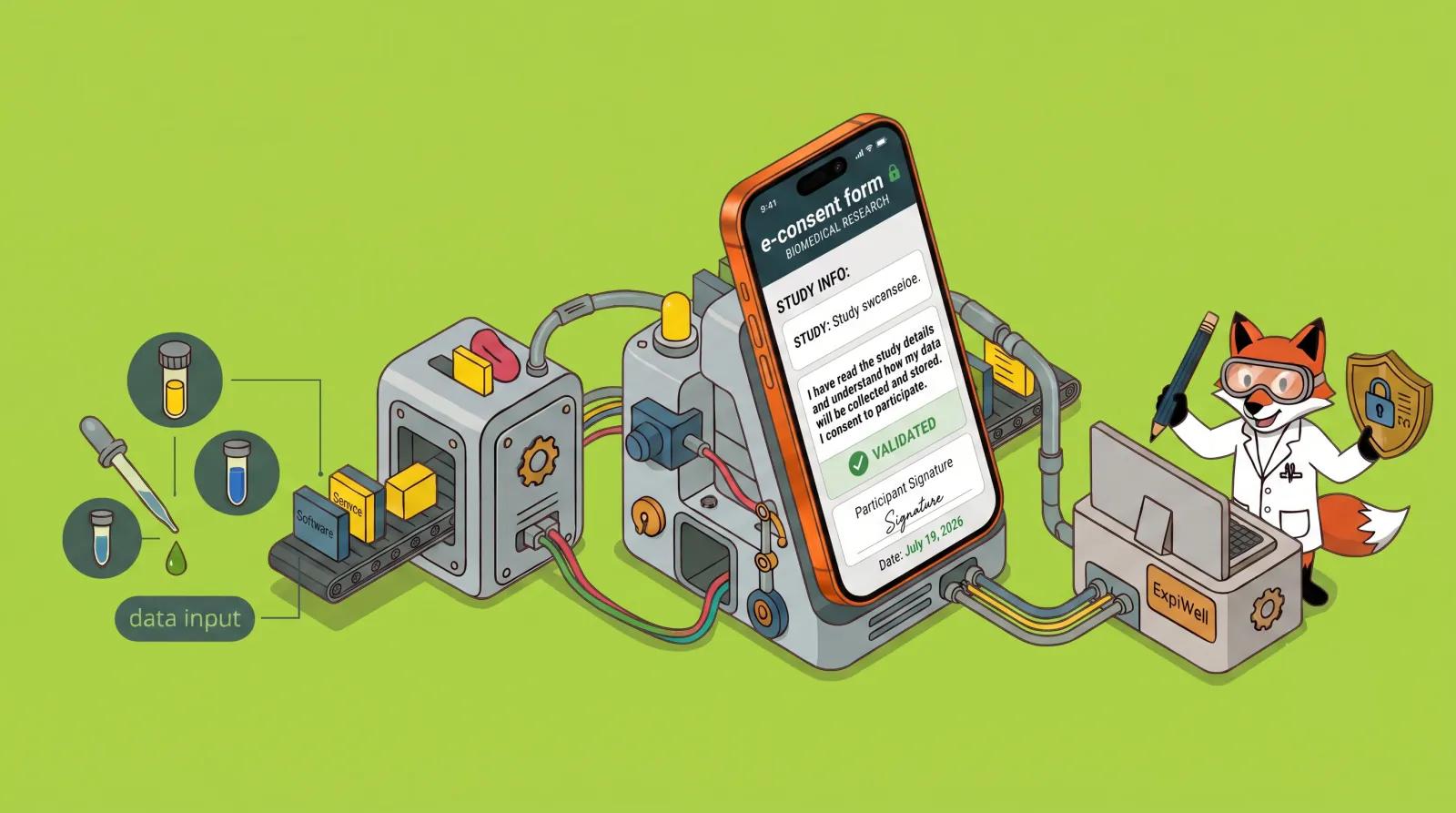
E-consent is the use of digital systems to convey study information and capture a legally binding agreement. It isn't just a "digital copy" of a form; it is a process that leverages technology to improve document version control, streamline administrative burdens, and enhance participant comprehension through interactive elements.
The Evolution of Consent Collection
The methodology for gathering participant agreement has undergone a significant transformation:
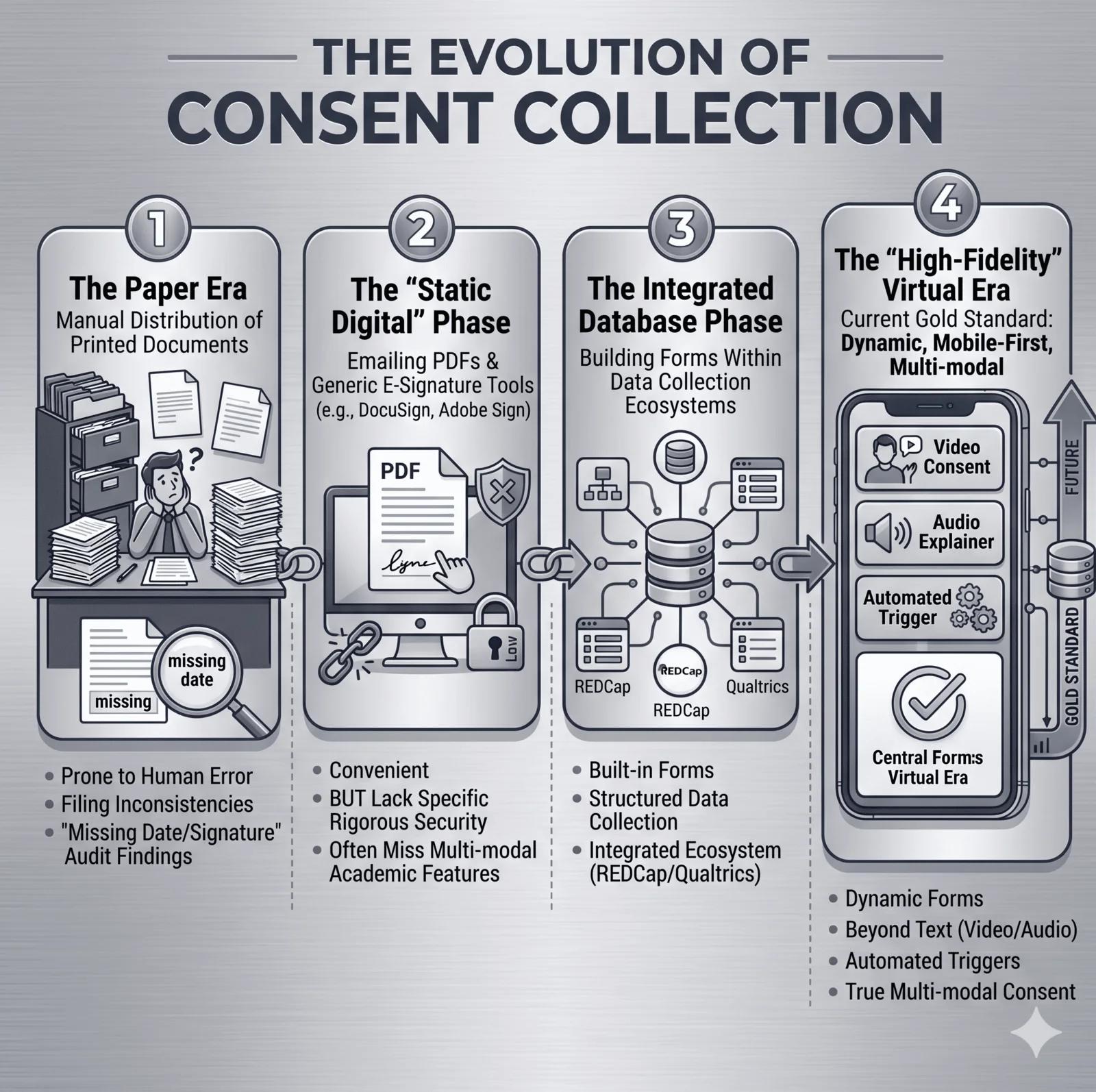
- The Paper Era: Manual distribution of printed documents. Prone to human error, filing inconsistencies, and "missing date/signature" audit findings.
- The "Static Digital" Phase: Emailing PDFs or using generic e-signature tools (e.g., DocuSign, Adobe Sign). While convenient, these often lack the specific rigorous security and multi-modal features needed for academic research.
- The Integrated Database Phase: Tools like REDCap or Qualtrics allowed researchers to build forms within their data collection ecosystem.
- The "High-Fidelity" Virtual Era: The current gold standard, where consent is dynamic, mobile-first, and multi-modal, moving beyond text to include video, audio, and automated triggers.
Common Practices: How We Consent Respondents Today
In modern academic settings, researchers typically use one of two workflows:
- Synchronous Remote Consent: Using web conferencing tools like Zoom or Skype to walk a participant through a digital form while observing them via video to verify identity.
- Asynchronous E-Consent: Participants complete the consent process on their own time via a dedicated platform. This is increasingly the standard for large-scale, decentralized, or longitudinal studies.
The Core Challenges of Consent Forms
Even in digital formats, "traditional-style" consent often fails to meet the needs of complex research.
The Challenges of Paper
- Accessibility Barriers: Geographic location or physical disabilities can prevent participants from visiting a site for a signature.
- Audit Risks: Missing signatures, incorrect dates, or outdated form versions are common regulatory red flags.
The Challenges of Basic Digital (PDFs)
- The Comprehension Gap: Participants often "blindly agree" to a "wall-of-text" PDF without reading it, a phenomenon known as consent fatigue.
- Verification Difficulties: A simple typed name does not verify that the participant personally reviewed the material or truly understands the risks.
The Solution: Why E-Consent Overcomes the Traditional "Paper Trail"
E-consent is not just a digital signature; it is a superior information delivery system. Research shows that participants using e-consent often demonstrate significantly better understanding of trial information compared to those using paper. By moving beyond the static document, researchers can:
- Integrate Multimedia: Use video explainers to decrease attrition and increase ecological validity.
- Ensure "Dynamic" Consent: In long-term studies, participants may forget their rights. E-consent allows for "re-consenting" or automated reminders at key milestones.
Leading E-Consent Platforms for Researchers
When selecting a platform, academic researchers prioritize HIPAA compliance, 21 CFR Part 11 readiness, and ease of use. Here are the top-tier platforms currently in use:
1. ExpiWell: The premier choice for EMA and longitudinal research, offering the most advanced multi-modal verification and mobile-first experience.
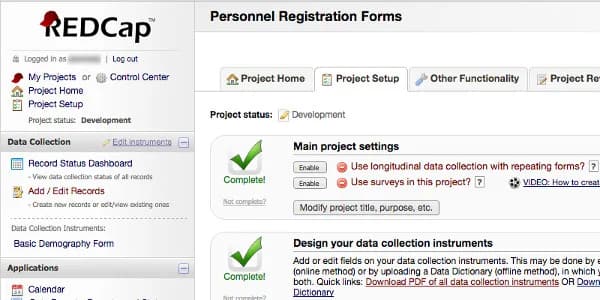
2. REDCap: A staple in academia for its robust database features and "E-Consent Framework."
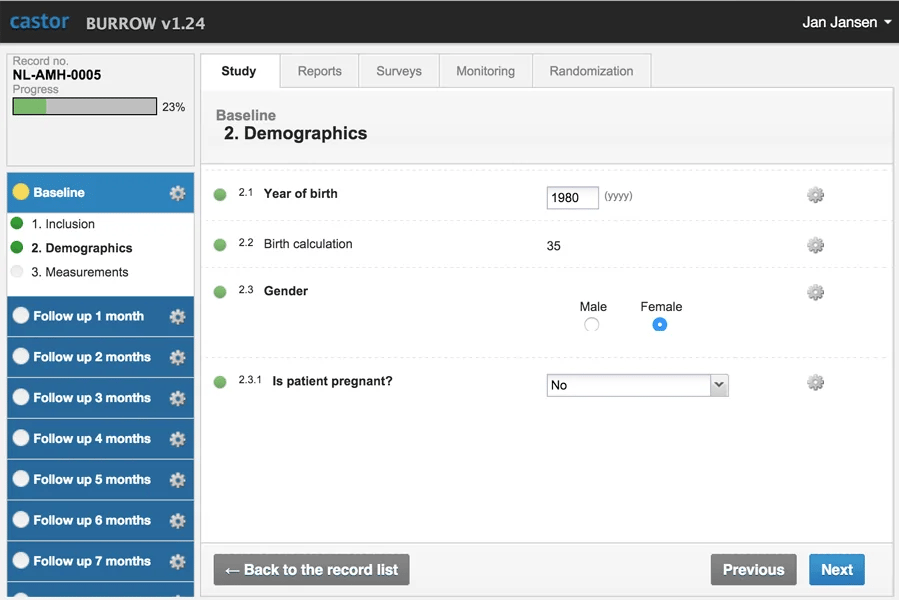
3. Castor EDC: Well-suited for academic and decentralized study teams seeking a user-friendly interface.
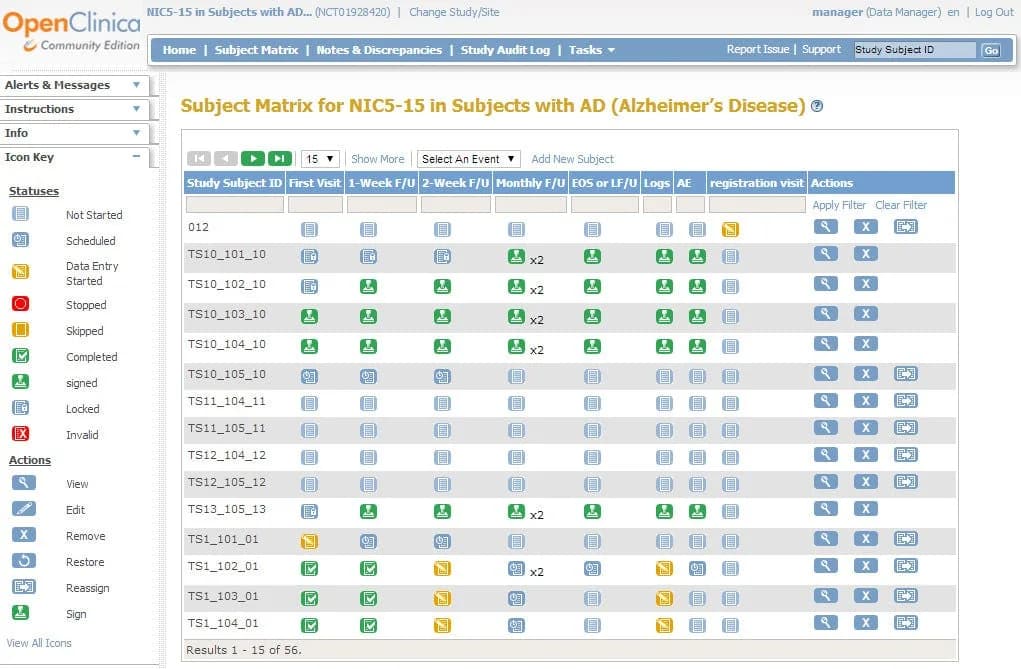
4. OpenClinica: Favored by academic teams with internal IT support for its collaborative form-building.
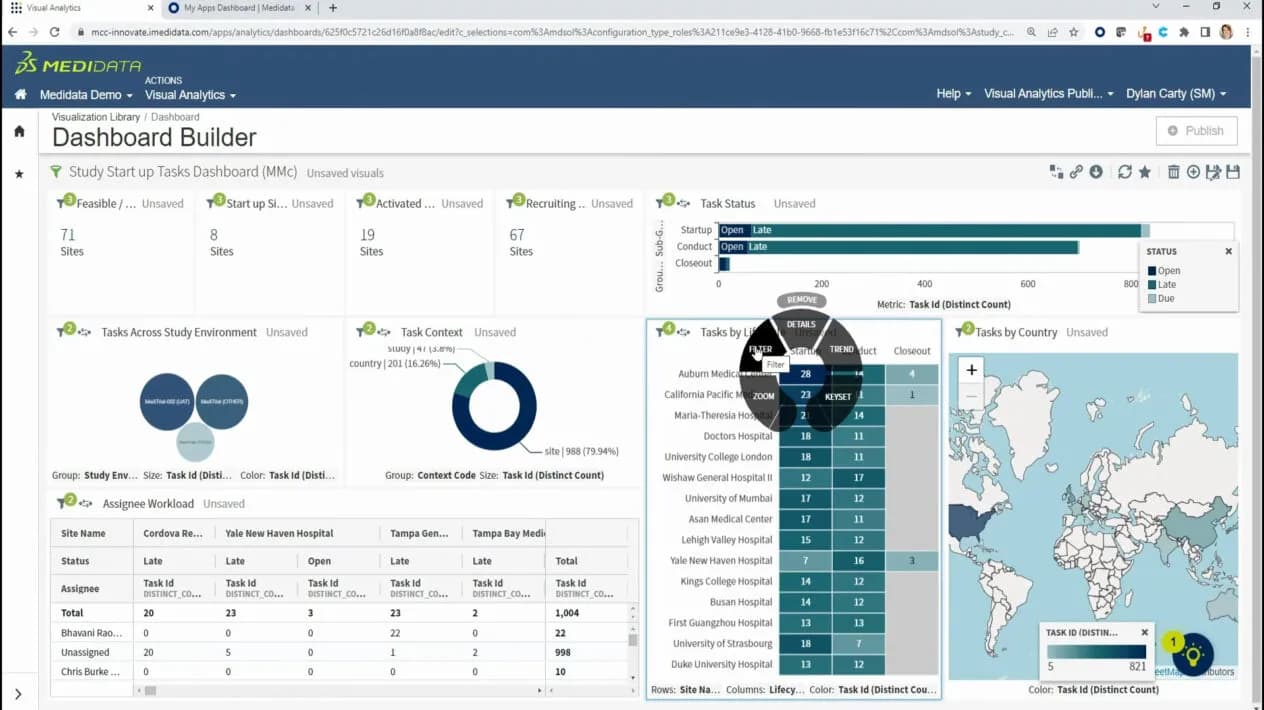
5. Medidata Rave: A high-end clinical trial industry standard used by larger academic medical centers.
Why ExpiWell is the Perfect Platform for Modern Research
While many platforms offer a digital checkbox, ExpiWell is a comprehensive ecosystem designed to maximize the efficacy of your e-consent process. It bridges the gap between rigorous academic standards and the modern participant experience.
1. Capturing "Thick" Data with Multimedia Consent
ExpiWell removes the "text barrier" by allowing researchers to integrate:
- Video Explainers: Upload videos to explain complex risks and benefits, proven to increase participant comprehension.
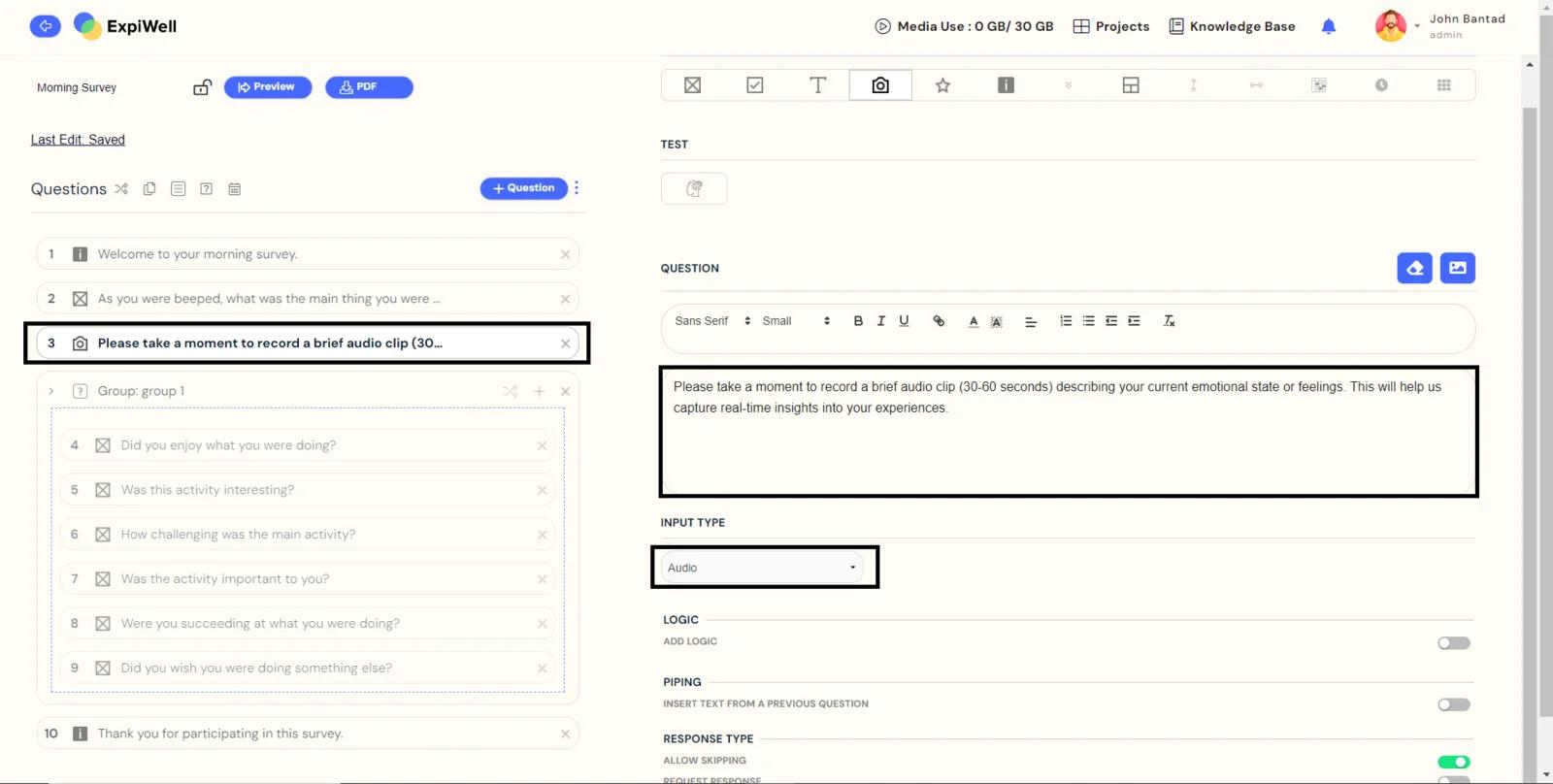
- Audio Verification: Instead of a typed name, have participants record a verbal statement of consent to verify identity with confidence.
- Automated Transcription: ExpiWell provides automated text transcription for all audio/video submissions, simplifying the auditing process.
Read more: here
2. Dynamic Consent: Right Time, Right Place
In longitudinal research, timing is everything. ExpiWell’s event-triggered surveys allow for:
- Milestone Re-consenting: Automatically trigger new consent forms only when a participant reaches a specific study phase.
- Location-based Triggers: Ensure consent is active or refreshed only when a participant enters a specific study environment.
Read more: here
3. Mobile-First Accessibility
Traditional e-consent often requires a desktop browser. ExpiWell moves the entire process into a smartphone app, meeting participants in their natural environment. This reduces friction, increases recruitment rates, and ensures your study remains a priority in a world competing for their attention.
Ready to modernize your research? Explore how ExpiWell’s electronic consent software can transform your next study into a professional, compliant, and deeply engaging experience.
for inquiries send an email at sales@expiwell.com or schedule a demo