Psychology continues to evolve toward understanding human experience as it actually unfolds — not in a lab, but in the flow of daily life. A new generation of researchers is using mobile-first, in-the-moment assessment technology to capture behavior and emotion with a level of accuracy and context that traditional methods can't match.
At ExpiWell, we're proud to support this shift by celebrating innovators who gather rich, contextual data to enable more personalized, timely interventions.
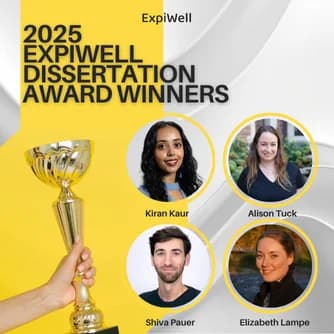
You Can Also Read: 2025 ExpiWell Dissertation Award Winners
This Year's Winners
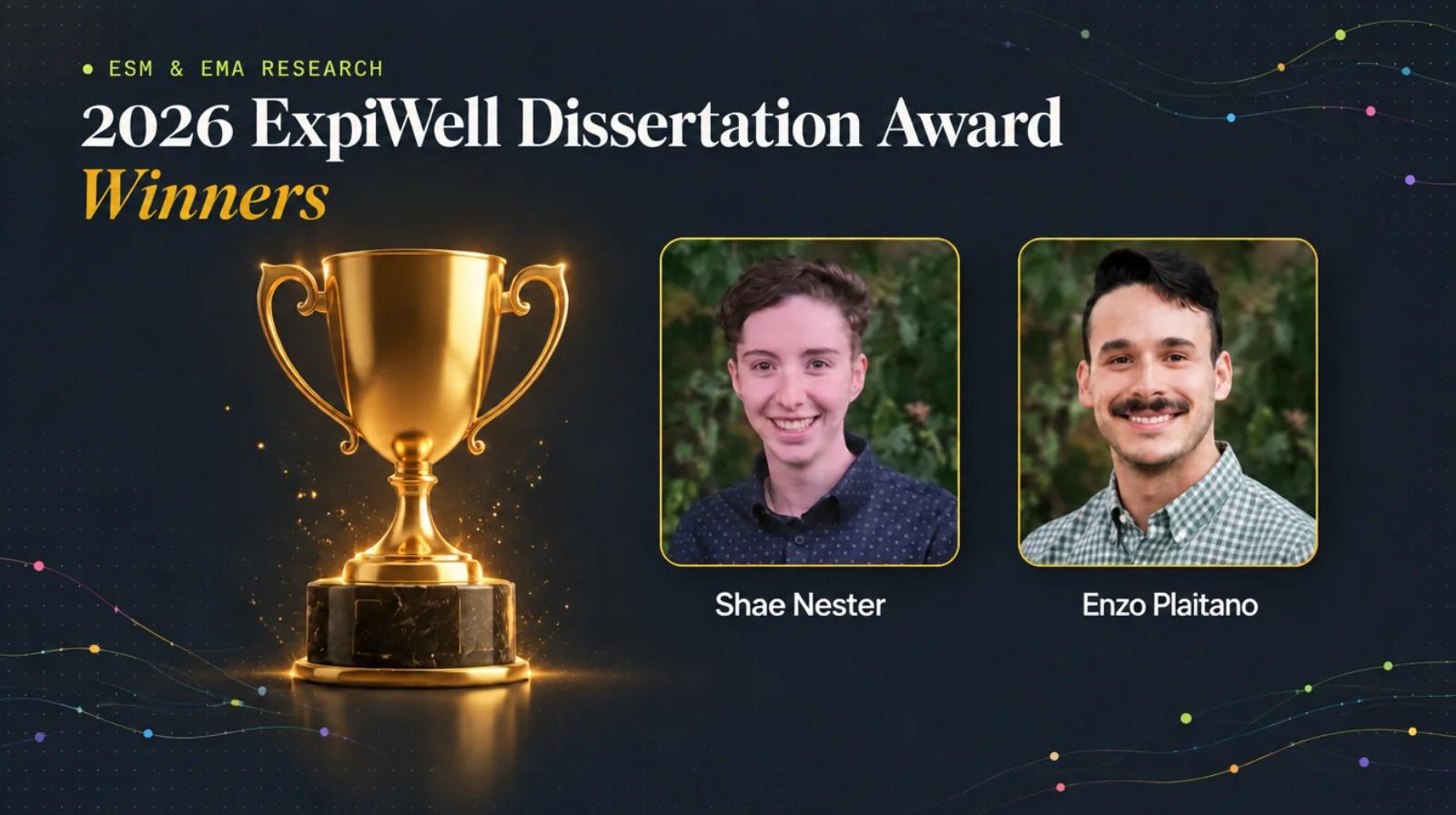
We're honored to introduce the recipients of the 2026 ExpiWell Dissertation Award.
Meet the Researchers
Enzo Plaitano: Supporting First Responders in the Moments That Matter

Enzo Plaitano is a PhD Candidate in Health Services Research at the Geisel School of Medicine at Dartmouth College and a Predoctoral Fellow at the Dartmouth Center for Technology and Behavioral Health, supported by a NIDA F31 training grant. His dissertation research examines how psychological processes unfold within the daily lives of first responders using ecological momentary assessment (EMA) and intensive longitudinal methods.
His work is largely informed by his experience as a licensed paramedic. Over the past decade, he has observed how repeated exposure to traumatic events, unpredictable work environments, and chronic occupational stressors can affect the mental health and well-being of first responders. He has also seen how limited access to timely support can leave first responders struggling to cope with these challenges in real time.
Enzo's dissertation is supported by a National Institute on Drug Abuse Individual Predoctoral Fellowship (F31) and examines momentary predictors of substance use among first responders. Using smartphone-based EMAs collected multiple times per day and Bayesian continuous-time structural equation modeling, he examines how dynamic changes in stress and emotion regulation are related to future substance use patterns within daily life. This work aims to identify moments of high vulnerability and potential windows for intervention. In a national study of 110 first responders, he found that worse-than-average perceived stress predicted increased nicotine use in the hours that followed, while better-than-average emotion regulation predicted reduced nicotine and alcohol use — effects that, for nicotine, persisted for over 24 hours.
Ultimately, his goal is to use these intensive longitudinal findings to inform the development of data-driven digital health interventions for our front-line workers. He envisions just-in-time adaptive interventions to provide personalized support to first responders when needed most. This line of research has the potential to improve mental health outcomes, reduce substance use risk, and strengthen resilience in first responders and other high-stress occupational groups.
About Enzo's Study
Identifying Modifiable Momentary Predictors of Substance Use in High Risk EMS Clinicians
Shae Nester: Taking Dissociation Research Out of the Lab
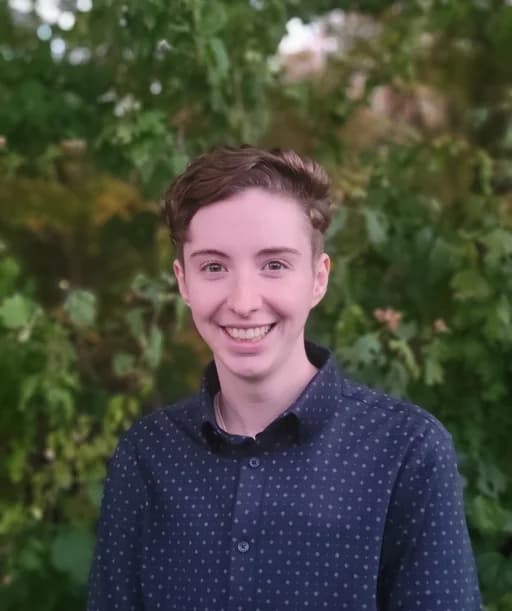
Shae Nester (they/them) is a doctoral student pursuing a Ph.D. in clinical psychology at the University of North Carolina at Greensboro, where they use multimethod approaches to understand trauma-related dissociation. They combine experience sampling methodology with physiological assessment, experimental designs, and treatment outcome research to take dissociation research out of the lab and into the daily lives of trauma survivors.
Shae's dissertation will integrate self-report and passive sensor heart rate data to explore whether momentary trauma-related dissociation impacts trauma survivors' connection to their bodily sensations, a necessary first step to develop and improve interventions that target dissociative symptoms. Trauma-related dissociation is reported by roughly 4% of community members and 20% of people with PTSD, meaning more than 13 million people in the United States experience it in their lifetime. Using ExpiWell's Sensor+ technology alongside a Fitbit Charge 6, Shae's study will have adult women with a history of childhood sexual trauma complete up to 10 surveys a day for seven days, allowing Shae to model the relationship between self-reported and actual heart rate in real time.
As a doctoral student, they have already received recognition as an international expert in dissociation. Their robust program of research has been supported by the National Institute of Mental Health (NIMH), U.S. Department of Justice Office for Victims of Crime, International Society for the Study of Trauma and Dissociation (ISSTD), and American Psychological Foundation.
About Shae's Study
A Laboratory and Ambulatory Investigation of Trauma-Related Dissociation, Interoceptive Accuracy, and Interoceptive Attention
Congratulations
Congratulations to Enzo and Shae on this well-earned recognition. Their work reflects the best of where EMA and ESM research is headed — rigorous, real-world, and built to make a real difference in people's lives.
We're grateful to be part of a research community this dedicated, and we'll keep pursuing our passion for EMA/ESM research so we can strive for a better future.