Fitbit Is Moving to Google Health: What It Means for Your Research Study
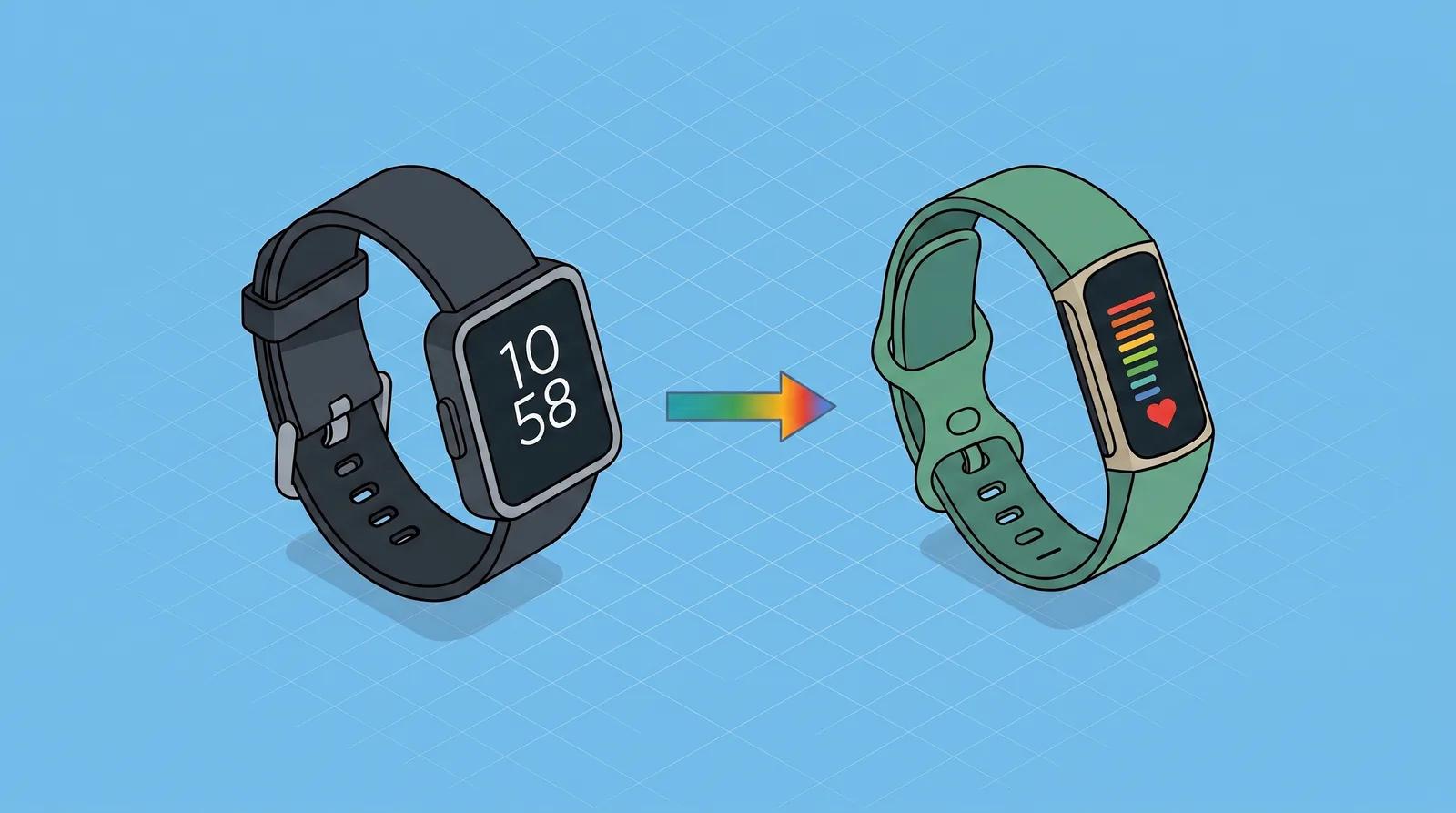
If you run studies that collect Fitbit data, you have probably seen something about Fitbit moving to a new Google Health app. Underneath that consumer-facing change is a second one that matters more for research: Google is retiring the Fitbit developer API — the connection that platforms like ExpiWell use to bring participants' activity, sleep, and heart-rate data into a study. Google has said this happens in September 2026.
Here is what that actually means for a research team, separated into the part you need to act on now and the part we are working on.
Two changes, often confused
The Fitbit app is becoming the Google Health app. This is what participants see. It came with an account change: since 19 May 2026, signing in to Fitbit requires a Google Account rather than a Fitbit account.
The Fitbit developer API is being retired and replaced by the Google Health API. This is the research-relevant one. It governs how a study platform receives participant data at all.
The first change is already in effect. The second arrives in September 2026.
The part that affects your enrollment today
One detail catches research teams off guard, and it has nothing to do with which platform you use.
Fitbit and Google Health require a personal Google Account. Google Workspace
accounts are not supported. A Workspace account is the kind an institution
issues — an @university.edu address, or an employer-issued Google account. A
participant trying to connect with one cannot complete the process.
For most consumer studies this is a non-issue. For the studies that recruit from inside a single institution — undergraduate participant pools, staff wellbeing studies, clinical teams — it is worth putting directly into your enrollment materials. Participants should expect to use a personal account, such as a Gmail address.
What stays the same
The broad categories are not going away. Google's replacement API is organised around activity and fitness, sleep, and health metrics — the same territory research studies use Fitbit for. Exactly how individual variables map across is something we are working through as part of the integration.
Data you have already collected is also unaffected. Wearable data captured through a study platform lives in that study's records, not in the API. Retiring an API stops new collection; it does not reach backwards.
What changes at the switchover
Every participant reconnects once. Google does not permit an existing Fitbit authorization to be transferred to the new system, so each participant grants access again — through Google this time. For the participant it is the same one-time permission step they already complete when joining a study with a wearable component.
That single constraint is the one to design around. If you are planning a longitudinal study whose collection window reaches into or past September 2026, build a reconnection step into your participant communications rather than assuming continuity.
What ExpiWell is doing
Work on a Google Health integration is in progress. Fitbit collection in ExpiWell continues to work normally in the meantime.
Because Google classes this data as health data, access is not simply granted on request. Google requires an independent, third-party security assessment of the platform before releasing these permissions — reviewing authentication, data handling, encryption, and access controls. ExpiWell is going through that assessment now. It is a demanding process, and the right one for data of this kind.
We expect the integration to be in place before the September 2026 retirement.
If you are planning a study now
Three things worth doing:
- Tell participants they need a personal Google Account for Fitbit — not a university or work account. This applies today.
- Note your collection window. If it reaches September 2026 or beyond, plan for a one-time participant reconnection.
- Ask us about your specific study. Email help@expiwell.com with your study dates and expected sample size. A general answer is less useful than one about your actual design, and it is better to talk the wearable component through now than to have it surface mid-collection.
For the full detail, including participant-facing instructions and FAQs, see our help guide: Fitbit is moving to Google Health.